Visibility That Actually Works at Night
Headlight Restoration in Gloucester for cloudy and oxidized lenses reducing nighttime visibility
Headlight lenses yellow and cloud over time because UV exposure breaks down the polycarbonate plastic and the factory protective coating wears away, leaving the porous plastic exposed to oxidation. Wyatts Detailing Services restores clarity by removing the damaged outer layer and resealing the lens, which brings back the light output your headlights produced when new. You'll see the road more clearly after dark, and oncoming drivers will see your vehicle sooner because the restored lenses project light forward instead of scattering it through a hazy surface.
The restoration process removes oxidation through progressive sanding with finer grits, then polishes the lens to optical clarity before applying a UV-resistant sealant that prevents the yellowing from returning as quickly. This approach costs a fraction of replacement headlight assemblies, which can run hundreds of dollars per side for many vehicles, and the results restore both function and appearance in the same service.
Arrange an on-site headlight evaluation to determine whether your lenses can be restored or require replacement.
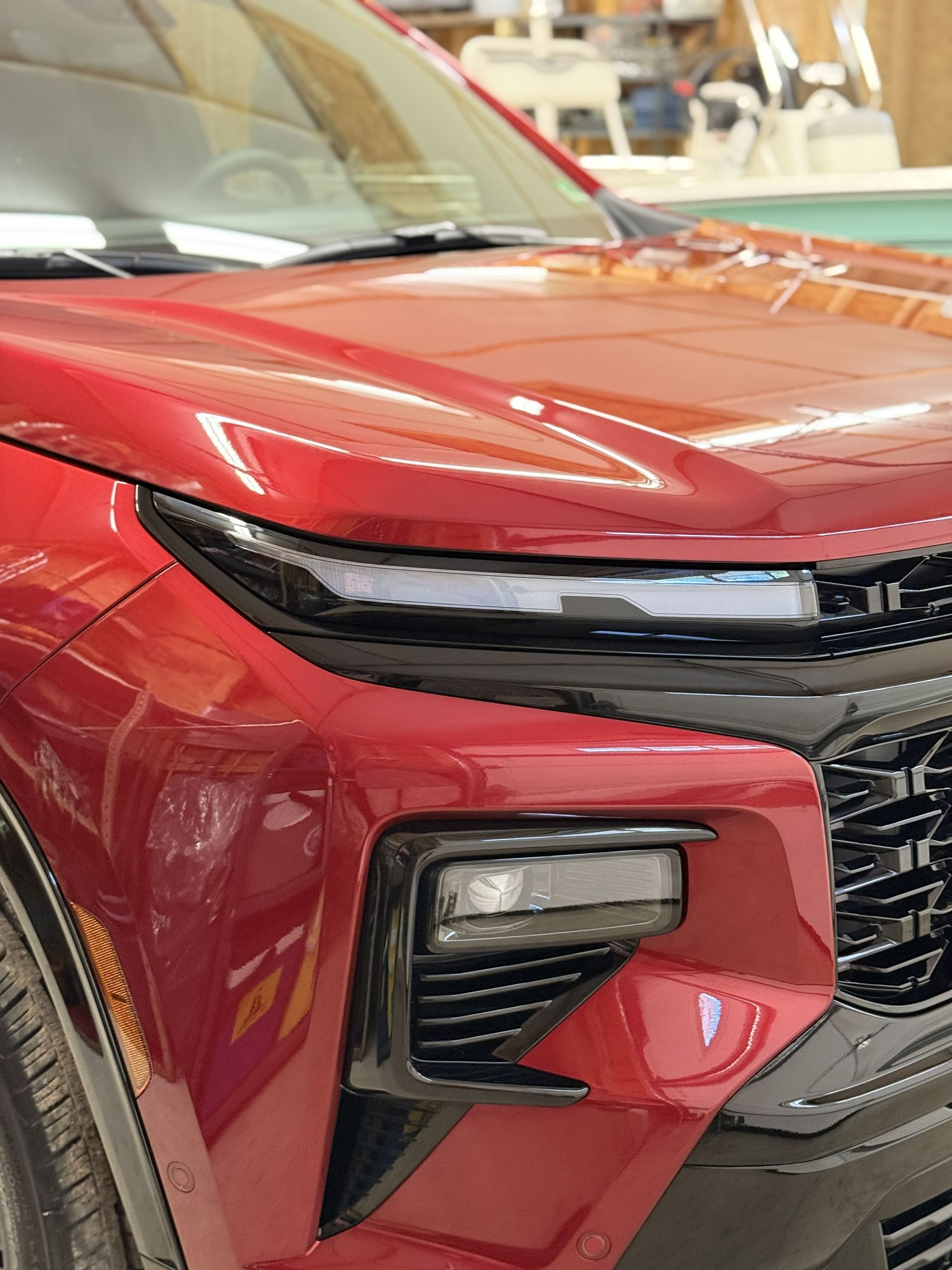
How Restoration Addresses Oxidation and Surface Defects
Oxidation creates a rough, pitted surface on the outer lens that scatters light in all directions rather than projecting it down the road in a focused beam. Sanding removes that damaged layer entirely, cutting through to clear polycarbonate underneath, which is why the lens looks worse during the middle stages of the process before polishing begins. Each sanding step uses a finer abrasive to smooth out the scratches left by the previous grit, working down to a finish that accepts polish and restores transparency.
Once the lenses are clear, you notice headlights illuminate road signs, lane markers, and the shoulder more effectively because light passes through the lens instead of diffusing through clouded plastic. The difference is most obvious on unlit rural roads in Gloucester County, where headlight performance directly affects how much advance warning you get of deer, debris, or curves ahead.
The UV sealant applied after polishing slows future oxidation, but it doesn't last forever—parking in shade and washing road salt off lenses during winter extends the time before haziness returns. Headlight restoration doesn't fix cracks, deep gouges, or lenses with internal moisture damage, which require full assembly replacement to resolve.
Questions Before Starting Your Restoration
Vehicle owners typically ask these questions when considering headlight restoration instead of replacement.
What causes headlights to yellow faster in coastal areas?
Salt spray and high humidity accelerate the breakdown of factory UV coatings on polycarbonate lenses, which is why vehicles in Gloucester often show headlight oxidation sooner than those in drier climates.
How long does restored clarity last?
Professional restoration with UV sealant typically maintains clarity for two to three years, though the timeline shortens if the vehicle is parked outdoors in direct sun without regular washing.
Why not just replace the headlight assemblies?
Replacement costs significantly more and requires the same maintenance to prevent new lenses from oxidizing, so restoration makes sense when the lens structure itself is intact and only the surface is damaged.
What's the difference between DIY kits and professional restoration?
Consumer kits usually skip the UV sealant step and use coarser abrasives that leave haze, while professional methods include multi-stage sanding, polishing compounds, and protective coatings that extend results.
How does restoration improve safety beyond appearance?
Clear lenses project more lumens onto the road surface, increasing the distance at which you can see obstacles and other drivers can see your vehicle, which reduces reaction time in low-visibility conditions.
Wyatts Detailing Services inspects lens condition to confirm whether oxidation is surface-level or whether internal damage requires replacement. Contact the business directly to review your headlight situation and restoration timing based on how often you drive after dark.